
Quartz vs. Quartzite: What's the Difference?
Short answer: they sound almost identical, but they're completely different materials. Quartz is engineered — ground natural quartz bound with resin, so it's non-porous and never needs sealing. Quartzite is 100% natural stone, prized for a marble-like look with serious hardness, but because it's natural it's porous and needs periodic sealing. Want the lowest-maintenance surface with predictable color? Quartz. Want a one-of-a-kind natural stone that shrugs off heat and knives? Quartzite. We install both — here's the honest comparison.
By Leo Chuahy · Prime Surfaces
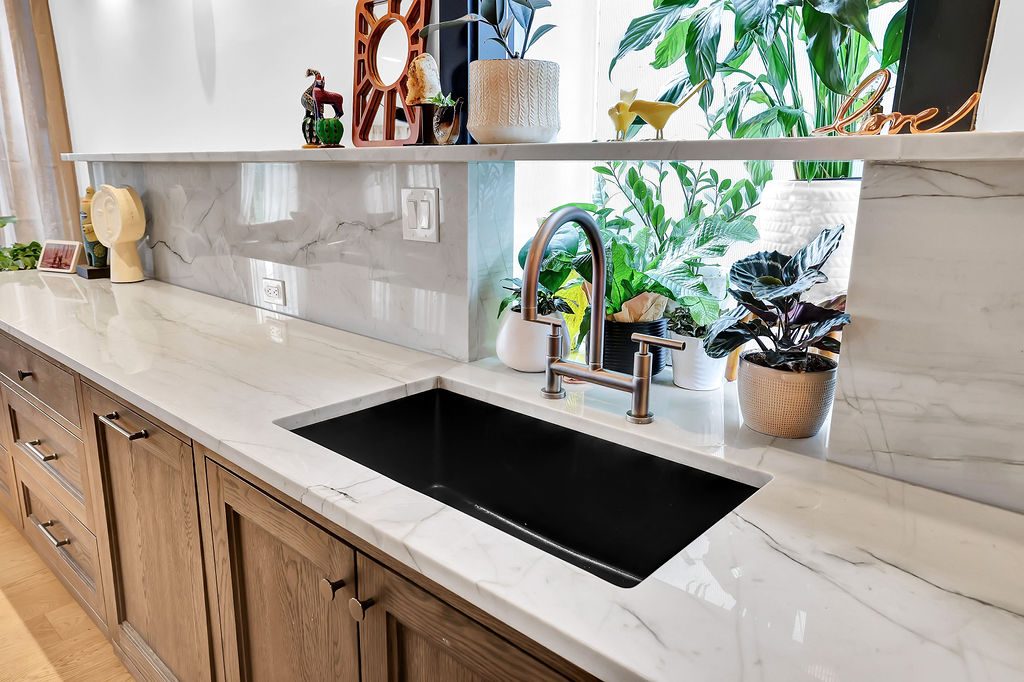
What is quartz?
Quartz countertops (brands like Caesarstone, Cambria, Silestone, and MSI) are engineered. They're roughly 90%+ ground natural quartz blended with resins and pigments, then formed into slabs. Because of that resin binder, quartz is non-porous — it never needs sealing, resists stains well, and comes in consistent, repeatable patterns. The trade-off: the resin is sensitive to heat, so a hot pan straight off the stove can scorch it, and prolonged direct sun can affect some colors outdoors.
What is quartzite?
Quartzite is a natural metamorphic stone — sandstone that heat and pressure fused into one of the hardest surfaces you can put in a kitchen. It often looks strikingly like marble, with flowing veins, but it's far more durable. Because it's natural stone it's porous, so it should be sealed at installation and re-sealed periodically. Every slab is unique, which is exactly why designers love it.
Quartz vs. quartzite, at a glance
Origin. Quartz is engineered (man-made); quartzite is natural stone.
Sealing. Quartz never needs it; quartzite needs periodic sealing.
Heat. Quartzite handles heat far better; always use trivets on quartz.
Scratching. Quartzite is extremely hard and scratch-resistant; quartz is durable but can be marked by heavy abuse.
Look. Quartz gives consistent, controlled patterns; quartzite gives unique, natural, often marble-like veining.
Maintenance. Quartz is the lowest-maintenance countertop made; quartzite asks for a little care in exchange for natural beauty.
Is it really quartzite — or marble?
Here's something a lot of shops won't tell you: some slabs sold as 'quartzite' are actually dolomitic marble, which is softer and will etch (leave dull spots) when it meets anything acidic like lemon or wine. True quartzite is silica-based and won't etch that way. A simple check is the glass test — real quartzite is hard enough to scratch glass, while marble won't. Because we install both, we'll tell you exactly what a slab actually is before you fall in love with it, so there are no surprises after it's in your kitchen.
So which should you choose?
Choose quartz if your priority is a worry-free surface: no sealing, consistent color, easy cleanup — ideal for busy family kitchens. Choose quartzite if you want the drama of natural stone with better durability than marble and true heat resistance, and you're fine sealing it now and then. There's no wrong answer — there's the right answer for how you actually use your kitchen, which is the conversation we have with every client.
FAQ
Is quartzite better than quartz?
Neither is universally better. Quartzite is a natural stone that's harder and more heat-resistant; quartz is engineered, non-porous, and maintenance-free. The right choice depends on whether you value natural beauty and heat tolerance or the lowest possible upkeep.
Does quartzite need to be sealed?
Yes. As a natural stone it's porous, so it's sealed at installation and re-sealed periodically — typically every year or few years depending on the stone and how the kitchen is used. Quartz never needs sealing.
Can you put a hot pan on quartzite?
Quartzite handles heat very well, but we still recommend trivets to protect the sealer and guard against thermal shock over time. On quartz, always use a trivet — direct heat can damage the resin.
Will quartzite stain?
Sealed quartzite resists staining, but wipe up spills like wine, coffee, and oil promptly. An under-sealed slab is more vulnerable, which is why sealing matters.
How do I know if a slab is real quartzite or marble?
True quartzite is hard enough to scratch glass; marble isn't. Some slabs sold as 'quartzite' are actually dolomitic marble and will etch from acids like lemon or wine. We identify every slab honestly before fabrication so you know exactly what you're getting.
Is quartz or quartzite more expensive?
Both span a wide range depending on the specific material, color, and slab. We'll give you a preliminary range for the exact slabs you're considering.
Which is best for a busy family kitchen?
Many families choose quartz for its no-sealing, easy-clean nature, or quartzite if they want natural stone that resists scratches and heat. Both are excellent — it comes down to whether you'd rather never seal or have natural stone.
Do you install both?
Yes — Prime Surfaces fabricates and installs quartz, quartzite, marble, granite, porcelain, and sintered stone, so our recommendation is based on your project, not on the one material we happen to sell.
Deciding between quartz and quartzite?
Send us your project and we'll walk you through the exact slabs that fit.